I saw two movies today at the Cartlon Cinema for cheap Tuesday matinees. The first film I saw was Robert Eggers' rather weird and horrific The Lighthouse. The second was also weird and horrific.
It was Cats! The hot mess of an acid trip of a movie!
The near-universal pans have been focusing on the practically non-existent plot and the CGI disaster that are the cats themselves. But there is a strange dichotomy with Hopper's Cats that one must grapple with when trying to review the film. You have the musical upon which the film is based, and you have the cinematic adaptation. Do you tear the film apart because the musical itself is bad? Or is it the filmmaking decisions that make this movie so terrible, so infamously horrible, so quickly?
As I often say -- why not both?
Andrew Lloyd Webber's musical is easy to dismiss as not exactly great theatre, but that's because so many people expect a conventional narrative-driven piece. Cats has no intention of being a plot-driven musical. Instead, it is widely noted for being a song sequence of cats introducing themselves, all while the patriarch cat tries to decide who will be sacrificed-- uh, I mean, who will be chosen to go to the Heaviside Layer, a cat version of heaven. Much dancing and singing ensues. Think of it as a sort of middle-brow pseudo-surrealism, a tripped-out musical fantasia of song and dance that has the dream logic of stream-of-consciousness writing.
The songs, unfortunately, are mostly unremarkable, and go on far too long (how many times does one need to hear the phrase "Jellicle cats"?), but by all accounts, live stage versions of the musical have fantastic dancing and performances. Cats is more of a formalist musical: by forgoing narration, we
should be focusing on the more formal aspects of the play: the songs,
the music, the dancing, the design.
And this is where the film adaptation goes so massively wrong.
The songs are unmemorable, yes, and the dancing has mostly been chopped up in the editing room. But what about the design? Oh! The design. If we're supposed to marvel at the technological feat of
turning the actors into cats, the filmmakers are sorely mistaken. These
look like cheap CGI cats with human faces pasted on, a feline uncanny valley. It's not even particularly well-rendered CGI, either. Famously, the producers almost immediately shipped out an "improved" version of the film after early screenings had negative feedback. But I remember seeing the trailers for the film and cringe-laughing, heavily impacted by major schadenfreude. The cats, simply put, look terrible -- and the basic scaling of the actors to their surroundings seems off: aren't cats a bit bigger than this? It's most obvious in the Train Cat's song (I can't be bothered to remember his name, despite it being sung a thousand times), as they stroll along a railway. They look more like the size of squirrels. And speaking of rodents...
There are dancing mice and cockroaches introduced in the Jennyanydots number that re-appear throughout the film, and these babies are pure nightmare fuel. Even worse than the Busby Berkeley-esque showgirl cockroaches are the faces of children slapped on the CGI mice. These mice get thrown around rather violently, but at least they don't get eaten alive by the cats, unlike their insect friends. It's a doozy of a directorial decision.
But there are other decisions by Hooper that made me scratch my head. One annoying tendency in the film is the use of silent breaks for dramatic effect: there are simply too many of them, and they just don't work. If the songs seem to go on forever, the film's use of these moments of silence make it worse. I must also really question the sound mixing of the film, which is often sloppy, possibly because the vocals were supposedly recorded live. More than once I thought I was in Robert Altman territory, with voices overlapping one another in an unpleasant way.
The supposed show-stopping song Memory is slipping fast from mine. It's a snooze, other than cringing at Hudson's over-performance of it. Hooper must've thought that hey!-- sticking the camera in Anne Hathaway's leaking face won her an Oscar, maybe it'll work again. Spoiler: it doesn't. Jennifer Hudson has been accused of over-acting before, but here it's a very valid criticism. Her performance is wretched, and I think it's because of Hooper's direction: "Emote! More emotion! Cry! Warble your voice! Pause unnecessarily during your phrases!" It's awful, my friends, and she deserves better. She's a talented singer, but... oh boy. This sticking the camera in the faces of actors is a Hooperism that sometimes works (The King's Speech) but often doesn't (Les Misérables), and the camerawork in the film is often of the shaky-cam variety. It's old hat now, and never really worked in the first place. Hold your damn camera still!
There's also something else that must be addressed. I'm not sure if it's the fault of Webber or Hooper, but there's a rather unsettling eroticism to Cats. Writhing figures, heavy breathing, a practical cat orgy at the Jellicle Ball fuelled by cat-drugs. It's uncomfortable for what's trying to pass itself off as a family film. It's made worse by the Taylor Swift cat's breasts and her performance as sex kitten. There's also the rampant fat-shaming that's supposed to be comedic, but instead reads as just lazy, obvious humour. James Corden is clearly having a great time, but I must ask why he is when his entire character is just one big fat joke.
And what's up with Idris Elba's Macavity? What a bizarre plot device this is: he's the "Napoleon of Crime" that has magical powers to make the Heaviside Layer nominees disappear to a boat on the Thames. I think it's an idea to introduce some sort of narrative suspense into the film, but it comes off as silly and unnecessary.
Silly and unnecessary. Yup. That about sums up this hot mess.
Showing posts with label review. Show all posts
Showing posts with label review. Show all posts
Wednesday, January 8, 2020

Thursday, March 21, 2013
Quick Reviews
Gentleman's Agreement (Elias Kazan, 1947)

Could be described as one of those "vegetable movies" that are 'good for you', perfectly nutritious and tasty in its own right, but not one that you're too keen on anyways. The story is simple: a journalist pretends to be Jewish for 8 weeks in order to write a story on anti-semitism. Quite the timely film, especially given that the Second World War and the Holocaust were only a few years prior.
The film is marred by a script that simultaneously tries to be serious and casual. The result is a mannered overacting, with the leads of Gregory Peck and Dorothy McGuire having Serious Discussions while romancing, trying to be naturalistic --Kazan's specialty with the Method school of acting, used to glorious effect with Brando a few years later in A Streetcar Named Desire and his other Best Picture winner On the Waterfront, also nabbing him his second Oscar-- but the dialogue is just far too written. No one speaks like this, and when the film is trying so hard to attain a sober realism mixed with a New York looseness... it just doesn't work out as much as the filmmakers are hoping.
Yet the supporting cast is fantastic, with Anne Revere (Mrs. Green), John Garfield (Dave Goldman) and a young Dean Stockwell each giving excellent turns that do manage to be naturalistic and loose. Celeste Holm won the Oscar for her supporting turn as gossip columnist Anne Dettrey, and it's not undeserved: she succeeds with the over-written dialogue, turning it into a wounded urbanite droll with just the right amount of near-screwball bubbliness.
There are some stunning moments in the film that profoundly capture the experience of bigotry: the silence of other guests at a hotel, the heartbreak of a child that has just been called a racial slur, the flippant aggression of a drunken man.
You could say why not just hire a Jewish writer? --but the point is that Green is someone who temporarily shifts his privilege, going from one identity to another despite looking and acting the same. Understandably, this film is used in school curricula, although I suspect the dryness of the film may turn off the students whom could use this message the most.
My favourite exchange, which slyly hints at some other forms of discrimination:
Tommy: "I don't like fruit."
Mrs. Green: "You like bananas."
Tommy: "Well, they're different!"
B+
Grand Hotel (Edmund Goulding, 1932)

Joan Crawford plays a young stenographer with razor-sharp wit and a bit of bubbly girlishness. It's a surprising turn, especially for us who are accustomed to her more serious or campy roles from later in her career. In fact, the grand cast as a whole is just excellent, but the filmmaking craft itself is not to be ignored, either. Brisk editing, interesting stories, and old Hollywood charm with just the right amount of camp from director Goulding.
A
Suspicion (Hitchcock, 1941)

Hitchcock lite, but an interesting turn for the director as it emphasizes the romantic comedy above the suspense. Joan Fontaine earned an Oscar for her performance, which I must admit I don't quite understand. I found her to be a near-parody of the chaste, bookish 'good girl', and lacking the depth that Cary Grant gives to his role. He is fantastic, as usual, in his turn as playboy, charming bastard and possible murderer. Hitchcock seems to be on auto-pilot here, without the sometimes goofy expressionism and flair he gives his other films.
B
The People vs. Larry Flynt (Milos Forman, 1996)

Milos Forman at his most biting, it's a material match made in heaven. Only his early Czech works stand up to it in pure political satire, but this is just another reason why Forman is in my mind one of the premier directors of the second half of the 20th century. We have our fantastic performances: Woody Harrelson is dynamite as the titular loveable slime ball, and Courtney Love is every bit as good in her doppelgänger role. Forman's pacing is swift and furious, with hardly a breath taken between zingers, and the film's loose feel fits perfectly. His ironic use of classical music adds to the delicious veneer of respectable scum, and we genuinely care for these riff-raff of porn pedlars, cheering as they defend their freedom of speech... even if we find them tasteless, vulgar and pretty much some of the most disgusting caricatures of America. Edward Norton shines in a supporting role as Flynt's long-suffering lawyer and fierce advocate.
A+
Tootsie (Sidney Pollock, 1982)

The relationship between men and women in the modern world: it's a theme that's been done a million times, but for whatever reason, 1982 was a year in which Hollywood cinema was bursting at the seams with gender theory. Victor/Victoria, The World According to Garp, The Best Little Whorehouse in Texas... and the most popular of them all and second-highest grossing film, Pollock's Tootsie.
Where to begin? The script! Oh, the crackling script. Just some of the gems:
"I never said I love you -- I don't care about you! I read The Second Sex. I read The Cinderella Complex. I'm responsible for my own orgasms. I don't care! I just don't like to be lied to!"
"I was a stand-up tomato: a juicy, sexy, beefsteak tomato! Nobody does vegetables like me. I did an evening of vegetables off-Broadway. I did the best tomato, the best cucumber... I did an endive salad that knocked the critics on their ass!"But the film also features a near movie-killing awful score that sounds like a cheap 70s television drama. A song montage at a farm is simply wretched, yet was inexplicably nominated for Best Original Song at the Oscars (as was the film for Sound, for reasons unknown). Jessica Lange won the Supporting Actress Oscar for her role as Hoffman's love interest, but it's Terri Garr's performance as Sandy is the best of the lot, besides Hoffman's powerhouse role as the gender-bending cross-dressing 'masculine woman' Dorothy Michaels. It's an astonishing turn, and testament to Hoffman's talent.
A-
Monday, February 25, 2013
"Key to the City" Short Review
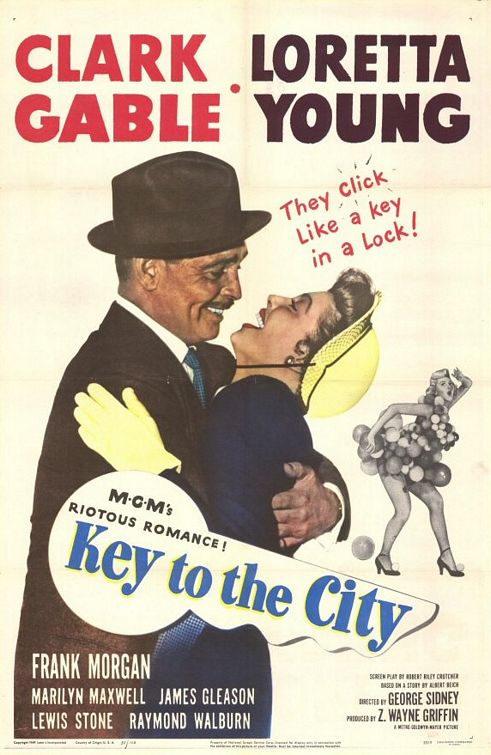
"MGM's riotous romance!", and also one of the most chaotic, sloppy narratives I've seen... hilariously inept. Most of the film is made up of elaborate setups, much like other screwball comedies, but instead of witty hijinks, we get frustrating, dragged out flops.
A conference in San Francisco has small-town mayors from all over the country convening. Gable plays the rough-and-tuble former pier worker and mayor of an industrial city, and Young plays the eloquent, educated mayor of Winona, Maine, population just over 30 000. They meet, shenanigans ensue, they fall in love, misunderstandings split them up, the reunite. Ta-dah!
The formula is simple and classic. Many enjoyable films follow the same steps, each with a different set of twists. But these twists? Oh boy.
Just one of the bizarre high-concept setups: Gable is decked out in a Little Boy Blue outfit for a costume ball, which his fire chief --Frank Morgan in his final performance-- got for him. He gets locked out of his room, searches for some staff, gets exposed, some homophobic gestures, the standard. Soon he's outside, hiding his outfit under a trench coat, but his bare legs visible. He then meets Young, dressed as a little girl complete with blonde curly wig and Madeline hat.

Yes, really.
Screwball romantic dialogue ensues. A police office then stumbles upon the two, mistaking it for "soliciting a child". Gable tries to explain that it's not what it appears to the man, who they still don't realize is actually a cop. But Young wants to be snarky, and decides to play along:

"The big man pinched me!"
And thus they end up in jail.
For the second time.
How about their take on the man-woos-hard-to-get-woman: one of the worst 'love scenes' I have come across. In pea-soup fog on a Telegraph Hill bench, Gable creepily nudges closer and closer to Young as she scuttles away. He romantically lays his head next to her and tries to woo her, as she tries to act graceful and ignorant of his approaches... while looking clearly uncomfortable. Like, actually scared. The doe-eyed music suggests romance, but with a more ominous score...

MURDER.
It really is a shame, because the basic storyline is a good one, and the paring of Gable and Young --real life lovers, remember?-- is a crackling one. They have genuine chemistry, although Gable seems to find the whole preceding a little bit silly.
Raymond Burr is his creepy self, complete with switchblade and 'stache, playing a corrupt city official. I need to see more of this guy, because I always find him just deliciously villainous. Marilyn Maxwell is quite the bombshell in her role as exotic dancer (doing the 'Atom dance', in which she dances around covered in balloons that she pops strategically), and even gets to fight with Young in a bizarre scene.
And to leave off, some good old-fashioned racial caricatures. A small Chinese boy walks around the police station, chanting "Lychee nuts! Chinese lychee nuts!" in a heavily accented voice, attempting to sell some to the Chief. And because he's Chinese, he has to be a shrewd little bugger, right? He bites down on a coin to check if it's real. He tries to swindle the Chief of some money. All while being oh-so-cute and Chinese! Awwwww!
C-
Friday, February 8, 2013
Favourite Films of 2012 (So Far)
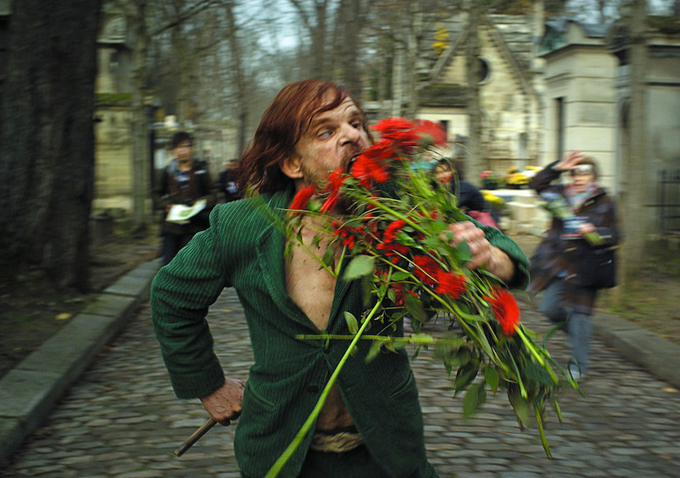
1. Holy Motors (Léos Carax)
The most exhilarating time I've had at the cinema in years. Absolutely bonkers, yet at times strangely moving. Denis Levant gives the performance of a lifetime.
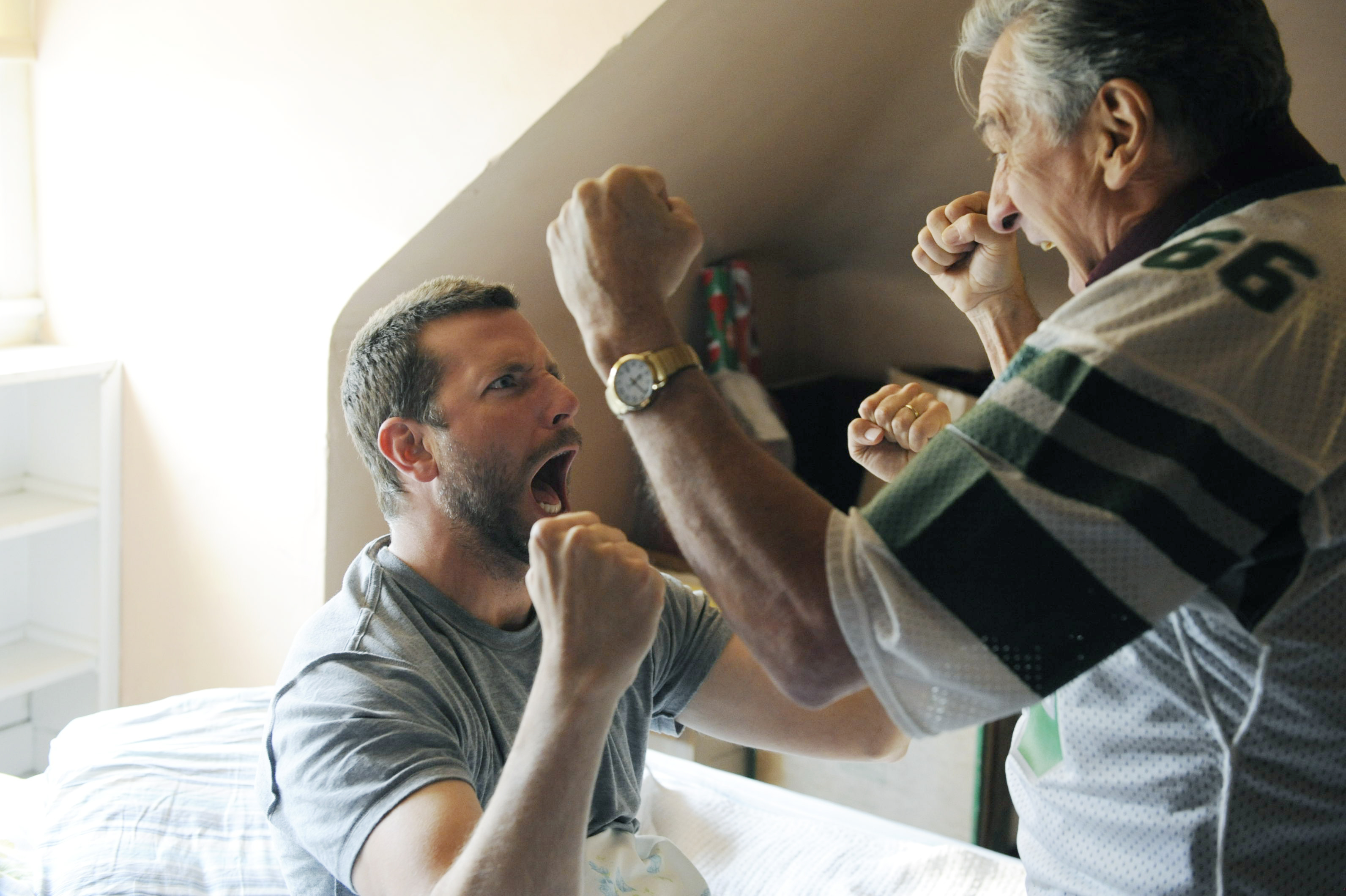
2. Silver Linings Playbook (David O. Russell)
Funny, touching, romantic, real.

3. Amour (Michael Haneke)
Beautiful and harrowing.

4. The Master (Paul Thomas Anderson)
The best shot film of the year, with a beguiling elliptical script and a game cast.
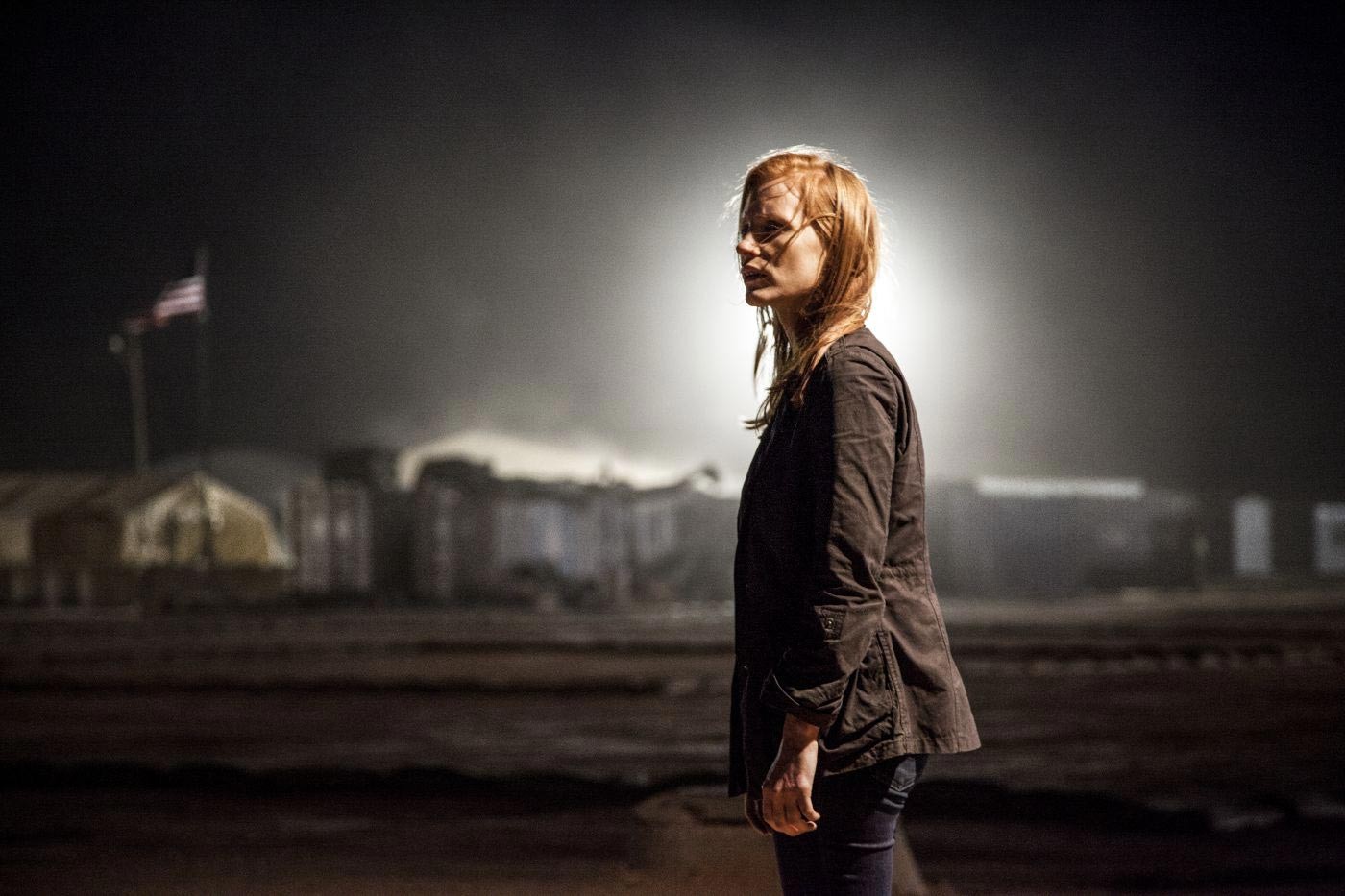
5. Zero Dark Thirty (Kathryn Bigelow)
Intelligent and thrilling, Boal and Bigelow up their ante, surpassing The Hurt Locker in cinematic and political spectacle.

6. Lincoln (Steven Spielberg)
A surprisingly witty script raises this historical biopic above what could have been a "rah-rah-American" patriotism-fest. Daniel-Day Lewis deserves the Oscar he'll most likely win.

7. Anna Karenina (Joe Wright)
Dazzling, lush and sweepingly romantic. Wright's modernist games and Stoppard's twisting script remain true to the core of Tolstoy's novel, while rushing it forwards to the 21st century.

8. Hitchcock (Sacha Gervasi)
My 'guilty pleasure' of the year. Mirren and Hopkins are a delight to watch, and while not all of the film's gambles work, who cares when you're having this much fun?

9. Cosmopolis (David Cronenberg)
Unabashedly highbrow, Cronenberg's film has many detractors --most of my theatre walked out-- but if you're up for an intensely cerebral time at the cinema, you may find yourself well rewarded. An incredible supporting cast, with Pattinson showing his chops.

10. Rust and Bone (Jacques Audiard)
Simultaneously chilly and romantic, with powerful performances.
Thursday, February 7, 2013
Review: "Silver Linings Playbook"
Silver Linings Playbook (David O. Russell, 2012)
A friend of mine described Silver Linings in a rather denigrating light: to him, the film is a dangerous fairytale typical of Hollywood, saying that all you need to get over mental illness is just to find a hot girl.
Well, I must respectfully disagree.
As someone who happens to have been diagnosed as bipolar, the film doesn't say to me that two broken people need to find love in order to get 'better'. Instead, it's suggesting that we can find love, too. This is a rather big difference, and it's why Silver Linings was such a cathartic delight for me.
So, where to begin? (Strangely enough, as I write this, I've begun to have a hypomanic burst. How fitting!) Well, how about the film's most acclaimed piece, Jennifer Lawrence's lived-in performance as Tiffany. What struck me about Lawrence is that this seems like a better, more real version of the ever-present "manic pixie dream girl" that Hollywood 'indie' cinema loves to throw at us. She's rough, she doesn't care what you think of her but will strike at your core with her bitter tantrums. The praise is well-deserved.
But I was particularly impressed with Cooper. The physicality of the role, with a real sense of what mania is like, struck me. Pat's mania is one that is often marked by what seems to be aggression, and the character indeed does lash out at points, but Cooper and Russell take care to not conflate the two. (Just because someone's manic doesn't mean that they're aggressive, and when someone with bipolar is aggressive or angry, it doesn't always mean they're manic.) Perhaps something that is 'missing' from the script is the lethargic periods of depression that many of us with bipolar experience. We do see Pat lounging about on his bed, yes -- but he seems to be the of the especially manic subset of bipolar. (I have met people that are "bipolar", but rarely experience the lows.) Cooper's comedic timing is also excellent, particularly with the conflicting, racing questioning sessions. I laughed out loud many times with these moments, as Cooper and Lawrence verbally spar with one another. It's a delight.
Pat's obsession with Nikki drives him forward, towards something that is magical and hopeful and impossible -- and something that we never really feel he should succeed with. Oftentimes, Cooper's Pat is too unstable for us to wish himself upon anyone else, but we feel for him so much, and his playbook so passionately followed, that we do hope that something, just something, will work out for him. This hope congeals the melodrama's tangles, and a set of coincidences should strike us as too composed to actually work. But it does. Russell's re-invention of genre avoids the ironic cynicism of most postmodern filmmakers, but instead aims for us to fall in love with the formula again. We're not fondly reminiscing as the film throws references at us, but genuinely re-living the experience.
Accurate representations of meltdowns: audial hallucinations, the quick flashes of memory, the claustrophobic extreme wide-angle shots. Russell's cinema has always been able to capture elevated emotional stages, and his experience with this (The Fighter, I Heart Huckabees, Three Kings) is used to rather spectacular effect. But what makes this spectacular is not how flashy it is, but how it's not.
Robert DeNiro's OCD is believable and effective: in his character, I saw echoes of some family members with their subtle obsessions and quirks. He shows us the vulnerability of the character like in his best roles of the past, and instead of Pat Sr. being a caricature or simple punch-line (or even worse, annoying) he's a loveable man, warts and all -- because we see just how much he really loves his family.
Jacki Weaver's role as the mother who keeps it all together may be a stock character, but she breathes in genuine pathos and a delightful Philly accent. She cautiously believes in her son and in the possibility that he can recover, but not foolishly so. There is a struggle in her as she tries to manage the predictable unpredictability of her son and her husband's mountain of tough-guy quirks. Weaver's Dolores doesn't suffer like a saint, as some actresses or directors would choose, but simply seems like a real mother. This realness is a reoccuring motif in Silver Linings, but one that is mixed with an old-fashioned Hollywood romanticism. It's a precarious balance to strike, but somehow they've done it. How? Well, David O. Russell does have a personal relationship with mental illness and bipolar: his son has the disorder. This love and understanding of someone with the condition really comes through in Silver Linings Playbook.
So we have a family of characters that are both loveable and raw, and they manage to find a happy ending. Who doesn't feel warm and wonderful when this happens in a movie when we want it so badly to happen, and we can believe that we can find such happiness, too? Yes, even us crazies can find love.
A friend of mine described Silver Linings in a rather denigrating light: to him, the film is a dangerous fairytale typical of Hollywood, saying that all you need to get over mental illness is just to find a hot girl.
Well, I must respectfully disagree.
As someone who happens to have been diagnosed as bipolar, the film doesn't say to me that two broken people need to find love in order to get 'better'. Instead, it's suggesting that we can find love, too. This is a rather big difference, and it's why Silver Linings was such a cathartic delight for me.
So, where to begin? (Strangely enough, as I write this, I've begun to have a hypomanic burst. How fitting!) Well, how about the film's most acclaimed piece, Jennifer Lawrence's lived-in performance as Tiffany. What struck me about Lawrence is that this seems like a better, more real version of the ever-present "manic pixie dream girl" that Hollywood 'indie' cinema loves to throw at us. She's rough, she doesn't care what you think of her but will strike at your core with her bitter tantrums. The praise is well-deserved.
But I was particularly impressed with Cooper. The physicality of the role, with a real sense of what mania is like, struck me. Pat's mania is one that is often marked by what seems to be aggression, and the character indeed does lash out at points, but Cooper and Russell take care to not conflate the two. (Just because someone's manic doesn't mean that they're aggressive, and when someone with bipolar is aggressive or angry, it doesn't always mean they're manic.) Perhaps something that is 'missing' from the script is the lethargic periods of depression that many of us with bipolar experience. We do see Pat lounging about on his bed, yes -- but he seems to be the of the especially manic subset of bipolar. (I have met people that are "bipolar", but rarely experience the lows.) Cooper's comedic timing is also excellent, particularly with the conflicting, racing questioning sessions. I laughed out loud many times with these moments, as Cooper and Lawrence verbally spar with one another. It's a delight.
Pat's obsession with Nikki drives him forward, towards something that is magical and hopeful and impossible -- and something that we never really feel he should succeed with. Oftentimes, Cooper's Pat is too unstable for us to wish himself upon anyone else, but we feel for him so much, and his playbook so passionately followed, that we do hope that something, just something, will work out for him. This hope congeals the melodrama's tangles, and a set of coincidences should strike us as too composed to actually work. But it does. Russell's re-invention of genre avoids the ironic cynicism of most postmodern filmmakers, but instead aims for us to fall in love with the formula again. We're not fondly reminiscing as the film throws references at us, but genuinely re-living the experience.
Accurate representations of meltdowns: audial hallucinations, the quick flashes of memory, the claustrophobic extreme wide-angle shots. Russell's cinema has always been able to capture elevated emotional stages, and his experience with this (The Fighter, I Heart Huckabees, Three Kings) is used to rather spectacular effect. But what makes this spectacular is not how flashy it is, but how it's not.
Robert DeNiro's OCD is believable and effective: in his character, I saw echoes of some family members with their subtle obsessions and quirks. He shows us the vulnerability of the character like in his best roles of the past, and instead of Pat Sr. being a caricature or simple punch-line (or even worse, annoying) he's a loveable man, warts and all -- because we see just how much he really loves his family.
Jacki Weaver's role as the mother who keeps it all together may be a stock character, but she breathes in genuine pathos and a delightful Philly accent. She cautiously believes in her son and in the possibility that he can recover, but not foolishly so. There is a struggle in her as she tries to manage the predictable unpredictability of her son and her husband's mountain of tough-guy quirks. Weaver's Dolores doesn't suffer like a saint, as some actresses or directors would choose, but simply seems like a real mother. This realness is a reoccuring motif in Silver Linings, but one that is mixed with an old-fashioned Hollywood romanticism. It's a precarious balance to strike, but somehow they've done it. How? Well, David O. Russell does have a personal relationship with mental illness and bipolar: his son has the disorder. This love and understanding of someone with the condition really comes through in Silver Linings Playbook.
So we have a family of characters that are both loveable and raw, and they manage to find a happy ending. Who doesn't feel warm and wonderful when this happens in a movie when we want it so badly to happen, and we can believe that we can find such happiness, too? Yes, even us crazies can find love.
Short Review: "Amour"
Amour (2012, Michael Haneke)

Perhaps Haneke's best film, of those that I've seen. It's very much a Haneke film: the stoic long shots and long takes, the harsh silences and amplified 'regular' sounds (the turning of pages, the running of water, the hum of a vacuum), the unsentimental and even cruel gazes. Some have said that this may be one of his most accessible films -- which is something I don't agree with. Whereas something as brutal as Funny Games or The Piano Teacher may be more overtly violent, those films have a certain sadistic, Brechtian glee that get your blood pumping. Amour does not have these moments. When the final act of love from husband to wife occurs, we gasp, but we do not get a stunned rush like with Caché's slice-and-spurt. I found myself watching this moment with a certain understanding and compassion, rather than a bewilderment that demands a chuckle of disbelief.
It is this compassion that really makes this film special in Haneke's oeuvre. But it being a Haneke film, it's not sentimentalized in any sense: the overbearing gaze of the camera really prevents such an act from occurring. As we watch Anne and Georges as they go about their day-to-day lives, I found a gentle sense of caring come over me, but one that was primarily marked with a respect. By that I mean I didn't watch and reduce them to archetypes of the elderly. They don't particularly remind me of any of my relatives. Instead I felt that these were two individuals that didn't want or need my pity, my sentimentalization. No. Anne asks Georges after her first stroke to promise her that he will never send her away ever again -- and he doesn't. This takes an incredible amount of respect for Anne's wishes, and is a sign of incredible love. He struggles greatly for the rest of the film to take care of her, and her descent is indeed... how do I say this? It's "heavy" to watch. But there are small sparks of lightness amongst all the heaviness: Georges' meandering reminiscing; Anne flipping through a photo album; small jokes and quips; an unexpected visit from a pigeon. As the body withers away, and the mind seems to have slipped, there can still be joy. But just as quickly as stopping a Schubert CD, it can cut to the silence.
Near the end of the film, there are a series of shots of landscape paintings. Apparently, these belonged to Haneke's parents, and some critics are suggesting that their only function are a direct personal stamp: nothing more. Instead, I found the paintings to be a key to the thematic weight of the film, which is one of my favourite concepts: the sublime. The paintings are all Romantic landscapes, some going into the Impressionist era, and they strike as more than simply a recreation of natural beauty. The clouds, the horizon, coming face-to-face with infinity and oblivion: Amour is a recognition of the gravitas of old age and inevitable death, but also recognizing that even during this apparent decline, love can survive --indeed, it must survive--and that two people can sit together quietly in each other's company, an aura of mutual respect, care and peace permeating the twilight. "C'est beau, la vie."
(Unedited, conversational review. I just typed and never looked back.)

Perhaps Haneke's best film, of those that I've seen. It's very much a Haneke film: the stoic long shots and long takes, the harsh silences and amplified 'regular' sounds (the turning of pages, the running of water, the hum of a vacuum), the unsentimental and even cruel gazes. Some have said that this may be one of his most accessible films -- which is something I don't agree with. Whereas something as brutal as Funny Games or The Piano Teacher may be more overtly violent, those films have a certain sadistic, Brechtian glee that get your blood pumping. Amour does not have these moments. When the final act of love from husband to wife occurs, we gasp, but we do not get a stunned rush like with Caché's slice-and-spurt. I found myself watching this moment with a certain understanding and compassion, rather than a bewilderment that demands a chuckle of disbelief.
It is this compassion that really makes this film special in Haneke's oeuvre. But it being a Haneke film, it's not sentimentalized in any sense: the overbearing gaze of the camera really prevents such an act from occurring. As we watch Anne and Georges as they go about their day-to-day lives, I found a gentle sense of caring come over me, but one that was primarily marked with a respect. By that I mean I didn't watch and reduce them to archetypes of the elderly. They don't particularly remind me of any of my relatives. Instead I felt that these were two individuals that didn't want or need my pity, my sentimentalization. No. Anne asks Georges after her first stroke to promise her that he will never send her away ever again -- and he doesn't. This takes an incredible amount of respect for Anne's wishes, and is a sign of incredible love. He struggles greatly for the rest of the film to take care of her, and her descent is indeed... how do I say this? It's "heavy" to watch. But there are small sparks of lightness amongst all the heaviness: Georges' meandering reminiscing; Anne flipping through a photo album; small jokes and quips; an unexpected visit from a pigeon. As the body withers away, and the mind seems to have slipped, there can still be joy. But just as quickly as stopping a Schubert CD, it can cut to the silence.
Near the end of the film, there are a series of shots of landscape paintings. Apparently, these belonged to Haneke's parents, and some critics are suggesting that their only function are a direct personal stamp: nothing more. Instead, I found the paintings to be a key to the thematic weight of the film, which is one of my favourite concepts: the sublime. The paintings are all Romantic landscapes, some going into the Impressionist era, and they strike as more than simply a recreation of natural beauty. The clouds, the horizon, coming face-to-face with infinity and oblivion: Amour is a recognition of the gravitas of old age and inevitable death, but also recognizing that even during this apparent decline, love can survive --indeed, it must survive--and that two people can sit together quietly in each other's company, an aura of mutual respect, care and peace permeating the twilight. "C'est beau, la vie."
(Unedited, conversational review. I just typed and never looked back.)
Wednesday, January 30, 2013
"Les Misérables" Review
After writing this review, I've come across an article in the New Yorker that pretty much summarizes what I thought of Les Misérables. Oh, and do I have some scathing opinions. As one of my friends noted on Facebook as I posted my one-word response last night, there will be blood. (My response: "Ugh.")
Where do I begin? I'm really not sure. But how about with one of the most obvious elements of the mise-en-scène: the makeup and costuming. Oh boy.
Overdone makeup that piles on the sores, bruises, decaying teeth, dirt and mud -- to comical levels. Stephanie Zacherek suggests calling it "hobo chic", and I'm inclined to agree. The film has been art directed to death, with the only apparent direction being "More! More grime! More dirt!" The hyperbolic level of grime that covers every surface in an attempt at bludgeoning the audience with Misery is a dangerous romanticizing of what suffering is. The melodramatic form, of course, asks the audience to share in its characters' suffering as a cathartic roller-coaster of emotions -- one that I am often very glad to take a spin on. But here, the romanticization of misery strikes me as a particularly dangerous** style of kitsch, as it turns past, real-life suffering into spectacle. This becomes acceptable for some because this suffering is so far away from us: the film is a period piece in France with British accents and talk of Kings and lots of old-fashioned poverty. But the situation depicted is also oh-so-close, with the contemporary repetition of an increasingly wealthy and powerful elite towering over massive income gaps, while reinforcing their statuses through more and more drastic legal measures.
But such social commentary is beyond Les Misérables. Instead, such analysis is reduced to a simple "Be nice to those less fortunate, and Trust in God." The musical asks us to surge with some sort of pride or hope when we see good-doers do good-things, and empathy for those who are covered with lots of really really gross sores and dirty dirt.
"Strive for your dreams!", it seems to be saying in a kind of vague self-affirmation mantra. I, of course, find such proverbial affirmations to be misguided, ineffective and flatly irritating. Good intentions and a belief in a god are not enough to change the world, as Victor Hugo seemed to be slyly, faintly aware of as he sets his epic's climax the failed revolution of June 1832. Much like Baudelaire or Flaubert, I appreciate Hugo's attempts to highlight social problems, but find his crude sentimentality and aestheticizing to be misguided.
And thus enter Schönberg and company. The novel has proven a popular source for adaptations, but I have not seen or heard any of these other versions, and my familiarity with Hugo's material has been second-hand exposure to Les Miz through friends and a high school production of the score's "highlights" (a term I use loosely). I remember four songs: "Castle on a Cloud", "Master of the House", "Do You Hear the People Sing" and, of course, the power-ballad "I Dreamed a Dream".
I don't want to spend too much time analyzing the score, as there really isn't much to say about it. Let's all admit something: it's mostly forgettable. Kretzmer's English lyrics are an endless surge of rhyming couplets and recitative, bludgeoning the audience with easily digestible narrative cues and nary a clever phrase. How many of the songs end with a ringing final note, Jackman or Crowe or whomever belting out the piece's final lyric as if it's the most significant existential cry or a perfect encapsulation of the song's Theme? These criticisms have surrounded the musical for years, with most critics regarding the show as middle-brow popera.
As a film theorist, my problems with the movie are with its technique and its ideology. Much has been made in the popular press about Les Misérables' supposedly groundbreaking technique of live-set recording. It's a neat trick, I guess... that's been done before. (Notably, Bogdanovich's At Long Last Love from 1975 with Cybill Shepherd and Burt Reynolds, of all people.) And what are we supposed to take away from this stunt? A more raw emotional performance, as if the practice of dubbing isn't done in virtually every other film made since the 30s? Sorry, I don't buy it. I didn't get anything more out of Hathaway's performance if she had recorded her vocals afterwards. And maybe if they hadn't made such a fuss around this technique, they wouldn't have thought twice about re-recording Russell Crowe's vocals, which are often off-key, restrained and sound as if he's daydreaming. Big mistake.
Oh, but it's more "realistic" that Seyfried's sky-high notes are a bit strained, that Hathaway catches a few notes in her throat as she cries, or that Jackman occasionally falters? I see.
So what? Why are we so obsessed with pseudo-realism?
If the filmmakers were so keen on realism, why the shunning of deep focus? The rapid-style editing, which is as far away from DeSica as possible? The bombastic camera swoops through obviously-CGI Paris streets and ships? Hooper's auteurist stamps of canted and expressionist ultra-high angles? Realism and the musical form are often uncomfortable bedfellows, with the successful examples I can think of being those whose goals are near-Brechtian irony, or at the very least, some sort of edge. Pennies From Heaven or New York, New York blend gritty noir and some realist touches to create biting, jarring films that leave the audience deeply uncomfortable, and A Star is Born or West Side Story aim for touches of pathos amongst their beautiful, jazzy numbers. Les Misérables is utterly without edge, and any possible prickly bits are sanded down with bombast. Everything is ramped up to the highest level of superficial emotion, with only the Thénardiers (Helen Bonham-Carter and Sacha Baron Cohen) appearing as the requisite "comic relief". But the Thénardiers seem to have dropped in from a different movie (a French Sweeney Todd through kabuki) and just don't blend in with the attempts at realism and, in fact, are a jarring trumpet blast announcing realist failure. They also serve to remind us just how lacking in any humour the rest of the film is, which takes itself much too seriously.
And I'm not sure where to fit this, but one scene really struck me as gratuitous and... ugh. I speak of the romanticizing of shit. You know what I'm talking about it. The scene could have been filmed without this wonderful element, but instead we witness our characters swimming in it, emerging from the water with their faces caked in it, probably having swallowed some of it. I couldn't help but be reminded of Salo at this point. The petty bourgeoisies savour their meal of shit, just as we are supposed to watch this scene and gush "Oh, how horrid!"

I understand melodrama. I often crave the purging elements the form offers. But Les Misérables offers too much, and seems to be primarily designed --nay, constructed-- to be a big sob-fest. Instead of being sucked into its emotional sway, I found myself chortling. Rolling my eyes. Staring at audience members who were duped into becoming blubbering messes. And I'm the kind of person that will gleefully gasp, coo and "aww" at the most cliché-ridden Bollywood epic. Perhaps it's that Les Misérables tries too hard in its attempts to be "about something", its underlining of Hugo's Christian elements, and its hammer-blow emotional subtlety. Marius and his fellow young, idealistic men seem to me as sharing the same goals of the film: full of hopeful ideas, and relying on rousing people's superficial emotions to get them to join in the choir.
But who are these people, and why should I care? The eponymous "miserables" are archetypes drowning in period gear and slathered with mud. They don't strike me as real people. And as for the rest of the revolving-door cast, we have Éponine, played by Samantha Barks, as the insufferable child who somehow grows into a self-sacrificial lamb, for no apparent reason other than her capital-L love for freckled Eddie Redmayne's Marius. Some annoying blonde, blue-eyed boy whose name I don't think was even mentioned, foolishly playing with the big boys. Hathaway's Fantine, a hyperbolic martyr figure, is only in the first act. Valjean is just pathetic, Javert is too one-note in his conviction (WHY is he so obsessed with capturing Valjean, other than to be a representation of The Law?), and I've just stopped caring to continue or bother editing this more.
Oh, and Russell Crowe.
Where do I begin? I'm really not sure. But how about with one of the most obvious elements of the mise-en-scène: the makeup and costuming. Oh boy.
Overdone makeup that piles on the sores, bruises, decaying teeth, dirt and mud -- to comical levels. Stephanie Zacherek suggests calling it "hobo chic", and I'm inclined to agree. The film has been art directed to death, with the only apparent direction being "More! More grime! More dirt!" The hyperbolic level of grime that covers every surface in an attempt at bludgeoning the audience with Misery is a dangerous romanticizing of what suffering is. The melodramatic form, of course, asks the audience to share in its characters' suffering as a cathartic roller-coaster of emotions -- one that I am often very glad to take a spin on. But here, the romanticization of misery strikes me as a particularly dangerous** style of kitsch, as it turns past, real-life suffering into spectacle. This becomes acceptable for some because this suffering is so far away from us: the film is a period piece in France with British accents and talk of Kings and lots of old-fashioned poverty. But the situation depicted is also oh-so-close, with the contemporary repetition of an increasingly wealthy and powerful elite towering over massive income gaps, while reinforcing their statuses through more and more drastic legal measures.
But such social commentary is beyond Les Misérables. Instead, such analysis is reduced to a simple "Be nice to those less fortunate, and Trust in God." The musical asks us to surge with some sort of pride or hope when we see good-doers do good-things, and empathy for those who are covered with lots of really really gross sores and dirty dirt.
"Strive for your dreams!", it seems to be saying in a kind of vague self-affirmation mantra. I, of course, find such proverbial affirmations to be misguided, ineffective and flatly irritating. Good intentions and a belief in a god are not enough to change the world, as Victor Hugo seemed to be slyly, faintly aware of as he sets his epic's climax the failed revolution of June 1832. Much like Baudelaire or Flaubert, I appreciate Hugo's attempts to highlight social problems, but find his crude sentimentality and aestheticizing to be misguided.
And thus enter Schönberg and company. The novel has proven a popular source for adaptations, but I have not seen or heard any of these other versions, and my familiarity with Hugo's material has been second-hand exposure to Les Miz through friends and a high school production of the score's "highlights" (a term I use loosely). I remember four songs: "Castle on a Cloud", "Master of the House", "Do You Hear the People Sing" and, of course, the power-ballad "I Dreamed a Dream".
I don't want to spend too much time analyzing the score, as there really isn't much to say about it. Let's all admit something: it's mostly forgettable. Kretzmer's English lyrics are an endless surge of rhyming couplets and recitative, bludgeoning the audience with easily digestible narrative cues and nary a clever phrase. How many of the songs end with a ringing final note, Jackman or Crowe or whomever belting out the piece's final lyric as if it's the most significant existential cry or a perfect encapsulation of the song's Theme? These criticisms have surrounded the musical for years, with most critics regarding the show as middle-brow popera.
As a film theorist, my problems with the movie are with its technique and its ideology. Much has been made in the popular press about Les Misérables' supposedly groundbreaking technique of live-set recording. It's a neat trick, I guess... that's been done before. (Notably, Bogdanovich's At Long Last Love from 1975 with Cybill Shepherd and Burt Reynolds, of all people.) And what are we supposed to take away from this stunt? A more raw emotional performance, as if the practice of dubbing isn't done in virtually every other film made since the 30s? Sorry, I don't buy it. I didn't get anything more out of Hathaway's performance if she had recorded her vocals afterwards. And maybe if they hadn't made such a fuss around this technique, they wouldn't have thought twice about re-recording Russell Crowe's vocals, which are often off-key, restrained and sound as if he's daydreaming. Big mistake.
Oh, but it's more "realistic" that Seyfried's sky-high notes are a bit strained, that Hathaway catches a few notes in her throat as she cries, or that Jackman occasionally falters? I see.
So what? Why are we so obsessed with pseudo-realism?
If the filmmakers were so keen on realism, why the shunning of deep focus? The rapid-style editing, which is as far away from DeSica as possible? The bombastic camera swoops through obviously-CGI Paris streets and ships? Hooper's auteurist stamps of canted and expressionist ultra-high angles? Realism and the musical form are often uncomfortable bedfellows, with the successful examples I can think of being those whose goals are near-Brechtian irony, or at the very least, some sort of edge. Pennies From Heaven or New York, New York blend gritty noir and some realist touches to create biting, jarring films that leave the audience deeply uncomfortable, and A Star is Born or West Side Story aim for touches of pathos amongst their beautiful, jazzy numbers. Les Misérables is utterly without edge, and any possible prickly bits are sanded down with bombast. Everything is ramped up to the highest level of superficial emotion, with only the Thénardiers (Helen Bonham-Carter and Sacha Baron Cohen) appearing as the requisite "comic relief". But the Thénardiers seem to have dropped in from a different movie (a French Sweeney Todd through kabuki) and just don't blend in with the attempts at realism and, in fact, are a jarring trumpet blast announcing realist failure. They also serve to remind us just how lacking in any humour the rest of the film is, which takes itself much too seriously.
And I'm not sure where to fit this, but one scene really struck me as gratuitous and... ugh. I speak of the romanticizing of shit. You know what I'm talking about it. The scene could have been filmed without this wonderful element, but instead we witness our characters swimming in it, emerging from the water with their faces caked in it, probably having swallowed some of it. I couldn't help but be reminded of Salo at this point. The petty bourgeoisies savour their meal of shit, just as we are supposed to watch this scene and gush "Oh, how horrid!"
"The misery! How delightful!"
I understand melodrama. I often crave the purging elements the form offers. But Les Misérables offers too much, and seems to be primarily designed --nay, constructed-- to be a big sob-fest. Instead of being sucked into its emotional sway, I found myself chortling. Rolling my eyes. Staring at audience members who were duped into becoming blubbering messes. And I'm the kind of person that will gleefully gasp, coo and "aww" at the most cliché-ridden Bollywood epic. Perhaps it's that Les Misérables tries too hard in its attempts to be "about something", its underlining of Hugo's Christian elements, and its hammer-blow emotional subtlety. Marius and his fellow young, idealistic men seem to me as sharing the same goals of the film: full of hopeful ideas, and relying on rousing people's superficial emotions to get them to join in the choir.
But who are these people, and why should I care? The eponymous "miserables" are archetypes drowning in period gear and slathered with mud. They don't strike me as real people. And as for the rest of the revolving-door cast, we have Éponine, played by Samantha Barks, as the insufferable child who somehow grows into a self-sacrificial lamb, for no apparent reason other than her capital-L love for freckled Eddie Redmayne's Marius. Some annoying blonde, blue-eyed boy whose name I don't think was even mentioned, foolishly playing with the big boys. Hathaway's Fantine, a hyperbolic martyr figure, is only in the first act. Valjean is just pathetic, Javert is too one-note in his conviction (WHY is he so obsessed with capturing Valjean, other than to be a representation of The Law?), and I've just stopped caring to continue or bother editing this more.
Oh, and Russell Crowe.
Subscribe to:
Posts (Atom)